
The Perfect Mortgage Starts Here
Some of our 40+ Lender Partners












Choice Financial is a local mortgage brokerage that offers our clients the best mortgage and terms we feel will most benefit the clients unique situation.
Choice Financial is a local mortgage brokerage that offers our clients the best mortgage and terms we feel will most benefit the clients unique situation.
About Choice Financial
━━━━━━━━
At our company, we prioritize our clients' goals by focusing on our first objective: helping them achieve the results they desire. We understand that purchasing a dream home often requires securing the necessary financing, and we are here to assist in that process. Our team of experts is dedicated to providing personalized support and guidance to ensure our clients' financing needs are met. Whether it's finding the right mortgage options or exploring alternative funding sources, we leverage our industry knowledge and network to help our clients turn their dreams into reality. With our comprehensive services and unwavering commitment, we strive to be the partner our clients can rely on to navigate the financing journey and secure the funds needed to purchase their dream home.
Here is why you are in great hands with Choice Financial
2500+

Clients Helped
30+

Combined Years
of Experience
20+

Mortgage Brokers/Agents

Our Services
Comprehensive mortgage solutions tailored to your unique needs and financial situation

First-Time Home Buyer
Expert guidance for first-time buyers with competitive rates and personalized advice to make your homeownership dream a reality.
- Down payment options
- Government programs
- Step-by-step guidance

Refinancing
Lower your payments and access your home's equity with our competitive refinancing options and expert market knowledge.
- Lower interest rates
- Cash-out options
- Payment reduction

Home Equity Loan
Unlock your home's equity for renovations, investments, or major expenses with competitive rates and flexible terms.
- Competitive rates
- Flexible terms
- Quick access to funds

Reverse Mortgage
For seniors 55+, access your home's equity without monthly payments. Stay in your home and improve your retirement lifestyle.
- No monthly payments
- Stay in your home
- Tax-free income

Second Mortgage
Alternative financing solutions with flexible approval criteria when traditional lending doesn't fit your situation.
- Flexible criteria
- Quick approvals
- Alternative solutions

Mortgage Renewal
Don't automatically renew! We'll find you better rates and terms to save you thousands over your mortgage term.
- Better rates
- Improved terms
- Thousands in savings

Self-Employed
Specialized mortgage solutions for self-employed individuals with flexible income verification and competitive rates.
- Flexible income verification
- Competitive rates
- Fast approvals

Debt Consolidation
Simplify your finances by consolidating high-interest debts into one low monthly payment with better terms.
- Lower monthly payments
- Reduce interest rates
- Simplify finances

Investment Properties
Build your real estate portfolio with financing solutions designed for investment properties and rental income qualification.
- Portfolio financing
- Rental income qualification
- Investment strategies
What Our Clients Say
Don't just take our word for it. Here's what real clients have to say about their Choice Financial experience.



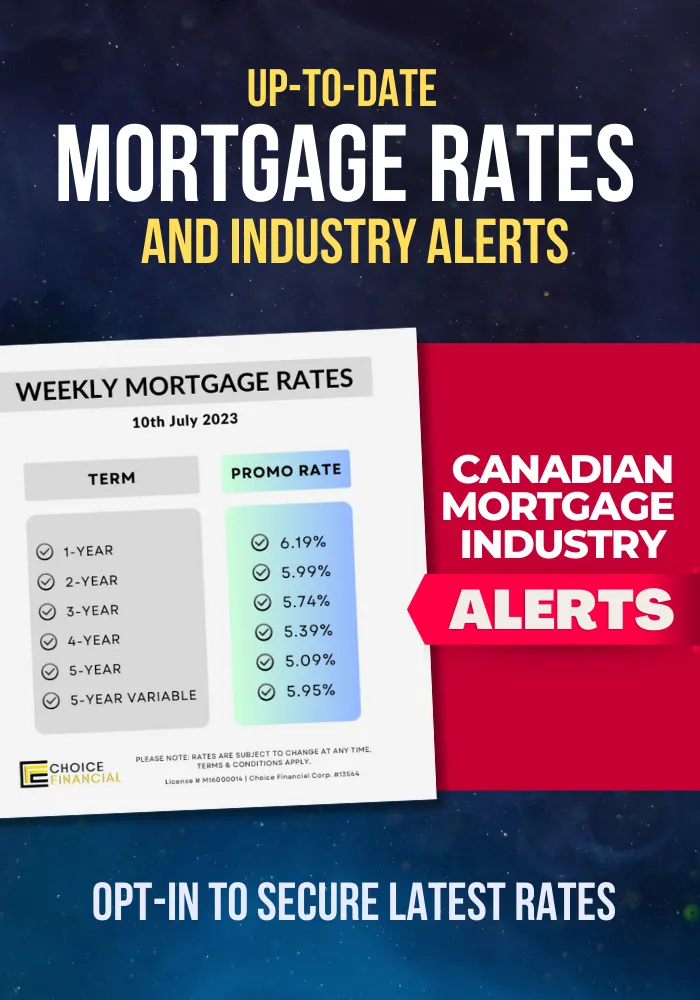
Sign up for our weekly mortgage rates and industry news.
Visit Our Office
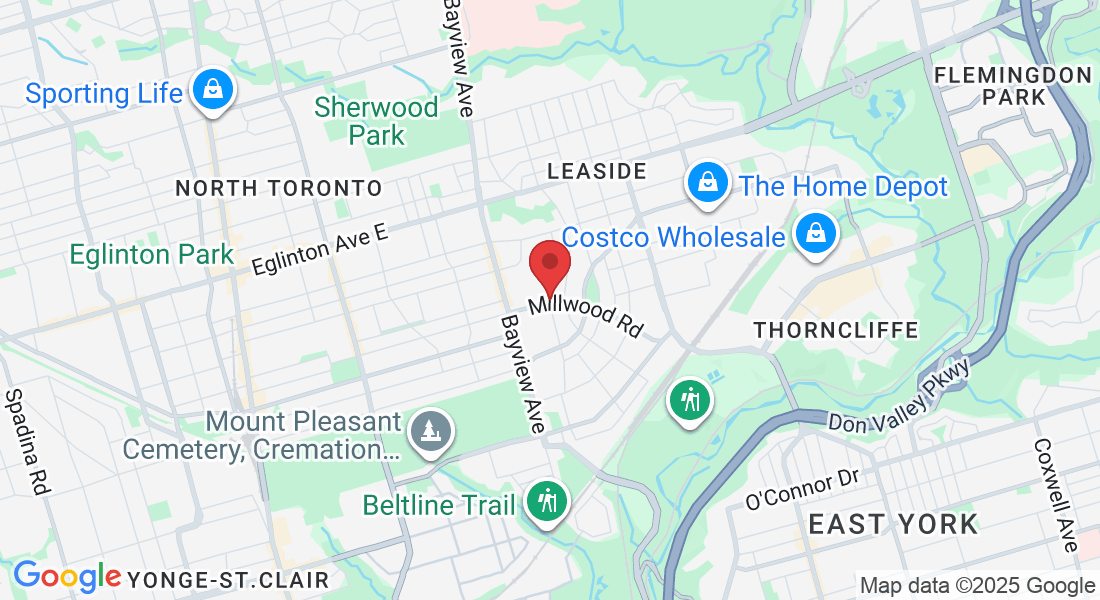
Located in the heart of East York, we're here to serve you in person or virtually across Canada.
785 Millwood Rd
East York, ON M4G 1W2
Phone
647-638-6358
Hours
Mon-Fri: 9AM-6PM
Sat-Sun: By Appointment
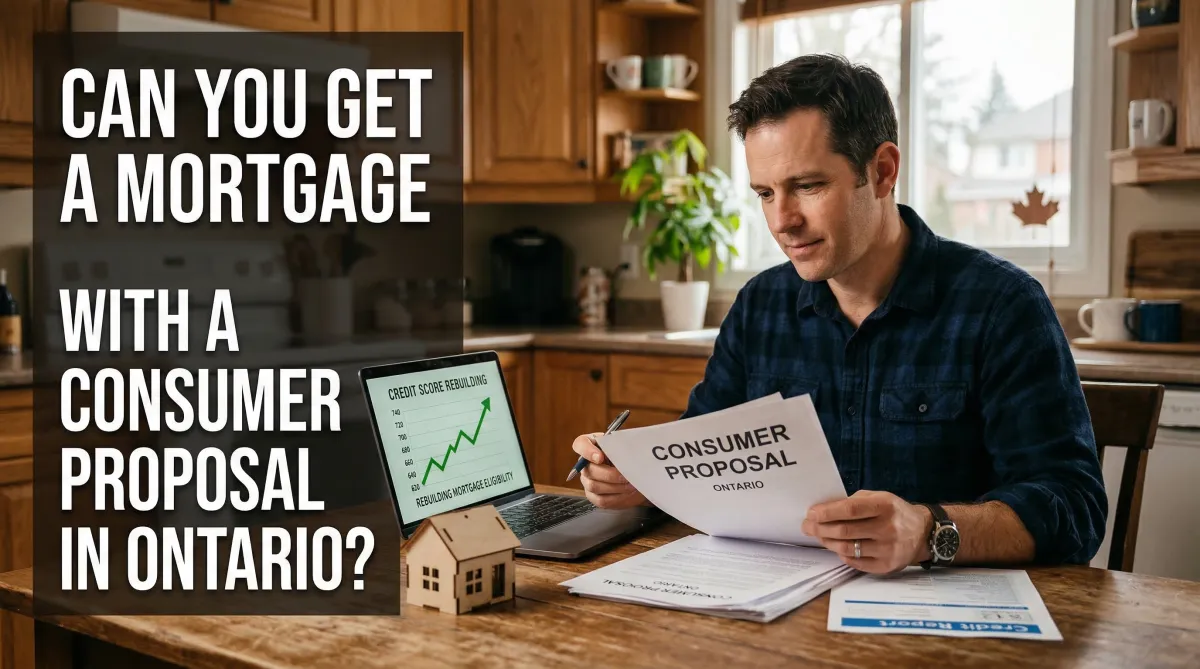
The Truth About Getting a Mortgage in Ontario After a Consumer Proposal
Most people who've been through a consumer proposal assume homeownership is off the table.
It's not.
It's just on a different timeline — and that timeline is shorter than most people think, if you build the right structure around it.
A consumer proposal is a legal agreement between you and your creditors to repay a portion of what you owe, usually at a reduced rate, over a defined period. It's a legitimate debt management tool. It's also a credit event that lenders pay attention to.
But here's what I tell every Ontario borrower who walks in having been through one:
The proposal is in the past. What matters now is what you've built since.
Let's break down exactly how this works.
What Is a Consumer Proposal?
A consumer proposal is a legally binding arrangement negotiated with your creditors through a Licensed Insolvency Trustee. Instead of declaring bankruptcy, you agree to repay a percentage of what you owe — or extend your repayment timeline — in a way that's manageable given your financial reality.
It's designed to help Canadians get out from under debt without losing everything.
The trade-off: it shows up on your credit report. And lenders notice it.
But showing up on a credit report is not the same as a permanent disqualification.
How a Consumer Proposal Affects Your Mortgage Options in Ontario
The impact is real. Let's not minimize it.
A consumer proposal signals to lenders that your debt load became unmanageable at some point. They're going to want to see that the story has changed before they approve a mortgage.
Here's the breakdown of what that actually looks like:
Major banks and CMHC-insured mortgages require a minimum of 2 years of clean credit history after the proposal is fully discharged before they'll consider a new mortgage application.
That 2-year window isn't arbitrary — it's the time lenders use to confirm your financial habits have genuinely shifted.
Alternative and B-lenders have more flexibility. In some cases, they'll approve mortgage refinancing even while a consumer proposal is still active — but only when there's sufficient equity in the property to pay out the proposal through the refinance.
For that to work, you typically need more than 30% equity. The lender refinances to 80% loan-to-value, and the remaining equity covers the proposal payout — discharging it in full as part of the transaction.
It's a bridge strategy, not a long-term solution. But for the right Ontario borrower with equity built up, it's a legitimate path forward.
The Rule of Twos — Ontario Edition
This is the framework that drives credit rebuilding after a consumer proposal.
Lenders and mortgage insurers want to see:
2 types of credit established after the proposal — a credit card and a car loan, for example
Each has a minimum limit of $2,000
With 2 years of clean repayment history on both
That's it. That's the target.
It sounds simple. But most people either don't know this framework exists or they rebuild the wrong way — getting one credit card, keeping a low limit, and wondering why lenders still aren't confident in their file two years later.
Structure the rebuild with the rule of twos in mind from day one.
In Ontario's market — where GTA entry-level homes are pushing past $700K and competition in Hamilton, Kitchener, Ottawa, and Barrie remains real — being ready when the 2-year mark hits is the difference between buying in a window of opportunity and missing it.
Can You Renew Your Mortgage During a Consumer Proposal?
Yes — and this is where a lot of Ontario homeowners find relief.
Renewing an existing mortgage is not the same as applying for new credit. Your current lender typically processes the renewal automatically as long as your mortgage payments have remained current throughout the proposal.
Renewal doesn't trigger a new credit application. So your proposal doesn't disrupt it.
Refinancing, however, is a different conversation. That requires a new credit application — and your proposal will directly affect that process. Refinancing during an active proposal is only accessible through alternative lenders, at higher rates, and typically with a 1% setup fee.
But if you have significant equity in your Ontario property, that refinance-to-payout strategy can actually accelerate your path to full discharge — and get you back to A-lender territory faster.
Run the math before you assume it's not worth it. Sometimes it absolutely is.
Getting a New Mortgage After a Consumer Proposal
This is the more straightforward path for most Ontario borrowers.
Once your proposal is discharged and you've completed two years of disciplined credit rebuilding, your mortgage options open up significantly.
The steps that move the needle:
1. Execute the Rule of TwosTwo trade lines. $2,000+ limits. Two years of clean payment history. That's your foundation.
2. Build a 20% Down PaymentA 20% down payment does two things in a post-proposal file:
It removes the requirement for CMHC or Sagen default insurance — and those insurers have strict post-proposal requirements
It signals to the lender that you've rebuilt genuine financial discipline since the proposal
In Ontario's market, 20% on a $700K purchase in Hamilton or a $900K property in the GTA is a significant savings target. Build toward it aggressively and early.
3. Consider a Co-Applicant. If your timeline needs to move faster than your credit rebuild allows, a co-applicant with clean credit and stable income can strengthen the file materially. Just make sure both parties understand the legal implications — a co-signer is fully on the hook for the mortgage if payments stop.
4. Keep All Other Payments Spotless. During and after a consumer proposal, every on-time payment is evidence. Every missed one is a setback. Utilities, phone, car payment, credit card — all of it feeds your credit profile. Treat every payment like it's being reviewed by an underwriter. Because eventually, it will be.
Ontario Case Study — The Real Numbers
Client: Mark, a trades contractor in Oshawa, Ontario.
Situation: Completed a consumer proposal after a rough stretch during a business downturn. Proposal discharged 18 months before when he came to us. He had one secured credit card with a $1,500 limit — not enough to satisfy the rule of twos.
What we did: We helped him add a second trade line — a small auto loan — bringing him to two active accounts over $2,000 each. We mapped out the remaining 6 months of clean payment history needed to hit the two-year mark, then pre-planned the mortgage application to coincide with that date.
Result: On month 25 post-discharge, Mark closed on a townhome in Whitby at a competitive rate with a conventional A-lender. Not a B-lender bridge. Not a private mortgage. A full conventional approval.
The proposal was in his past. The structure we built put him in a position to prove it.
Key Terms Defined
Consumer Proposal: A legally binding debt repayment agreement negotiated through a Licensed Insolvency Trustee — a bankruptcy alternative.
Discharge: The formal completion of a consumer proposal. The 2-year clean credit clock starts here.
Rule of Twos: The credit rebuilding benchmark lenders and insurers use post-proposal — 2 trade lines, $2,000+ limits, 2 years clean history.
A-Lender: Major banks and credit unions with strict qualification guidelines. Generally requires a 2-year post-discharge clean history.
B-Lender: Alternative lenders with more flexible qualification criteria. Higher rates, but accessible during or shortly after a consumer proposal in certain circumstances.
CMHC / Sagen: Federal and private default mortgage insurers. Both require a minimum 2 years post-discharge before insuring a new mortgage.
Loan-to-Value (LTV): Your mortgage balance as a percentage of the home's appraised value. 80% LTV means 20% equity — the threshold that removes insurer involvement.
Co-Applicant: A second borrower on the mortgage application whose income and credit strengthen the overall file.
Licensed Insolvency Trustee: The federally regulated professional who administers consumer proposals and bankruptcies in Canada.
Common Questions From Ontario Borrowers
How long after a consumer proposal can I get a mortgage in Ontario?
Two years after your proposal is fully discharged, with clean credit rebuilt to the rule of twos standard. If your proposal ran 4 years, you're looking at 6 years total from the start date before A-lender options open. Plan your rebuild from day one.
Can I get a mortgage while my consumer proposal is still active?
For a brand new purchase, it's extremely limited. For a refinance using existing home equity to pay out the proposal — yes, through B-lenders, provided you have 30%+ equity. We analyze this on a case-by-case basis.
Do I need 20% down after a consumer proposal?
Not a hard rule — but practically speaking, 20% removes default insurers from the equation and gives lenders more flexibility to make exceptions. In Ontario's market, building toward 20% is the stronger strategy.
Will I always pay B-lender rates post-proposal?
No. Once you've hit the two-year mark post-discharge with a properly rebuilt credit profile, A-lender rates are on the table. The B-lender bridge is temporary when it's used — not permanent.
Can I renew my existing mortgage during a consumer proposal?
Yes. Renewal doesn't require a new credit application. As long as your mortgage payments have been current, your lender will almost always process the renewal without issue.
What if I only have one credit card post-proposal?
That's a gap. One trade line doesn't satisfy the rule of twos. Add a second — a car loan, a secured card with a different issuer, a line of credit — and start the clock. I'd rather know about this 18 months before you want to apply than 30 days before.
Here's the Move
A consumer proposal is not a life sentence.
It's a chapter. And every chapter ends.
What matters is what you build in the chapters that follow.
If you've been through a consumer proposal in Ontario and you want to know exactly where you stand, what your timeline looks like, and what steps move you toward approval — let's run the numbers now, not later.
The earlier we map it out, the cleaner the path to closing.

Want to work with us?
Let's discuss your mortgage goals and create a personalized strategy that works for you.
Our team brings years of experience in residential and commercial lending, with a commitment to finding solutions that fit your lifestyle and financial objectives.
Contact us today for a no-obligation consultation.
Choice Financial Corp. #13564
Independently owned and operated
Licensed in
Ontario FSRA # 13564
Alberta: RECA
CF Choice Financial Corp:
B.C: BCFSA #MB605782
COMPANY
CUSTOMER CARE


Copyright 2026. Choice Financial Corp.. All Rights Reserved.
Privacy Policy - Terms ofUse